
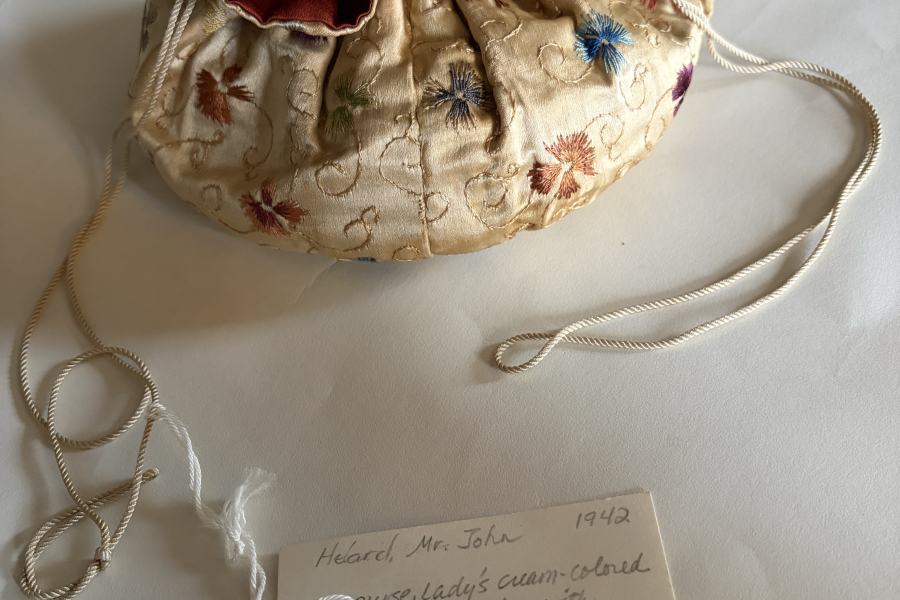
What is a reticule?
Reticules are small, drawstring bags that gained popularity in the late 18th century. Prior to the 1800s, women used to tie pockets around their waists under their petticoats. The fullness of their skirts would mask the bulk of any items in their pockets. As slim-line, sheer dresses came into fashion during the Regency period, women could no longer conceal their pockets under their skirts; so they began carrying them on the outside.
These reticules were often made of velvet, satin, silk, or netting. Women would decorate them with beading, embroidery, and paint as a way of making them more beautiful and showcasing their handwork.
Where did the term reticule come from?
The word reticule comes from French “réticule” which derives from the latin word for net. Reticules were also called “indispensables” as women would carry their necessities within them. There is written evidence that some men, who thought these small bags silly, referred to them as “ridicules”; but it is likely that this was a play on the word “reticule” rather than the root of it.
More reading: https://regencyfictionwriters.org/the-reticule-or-the-ladys-pocket-exposed/
When did reticules go out of fashion?
Fashion historian Carrie Midura, who led the February 2026 reticule embellishment workshop at Gore Place, says they never did. The reticules of the Regency era have evolved into the vast variety of purses (handbags, clutches, fanny packs, etc.) that we still use today.
Gore Place has a number of reticles in the collection, a few of which are highlighted below:
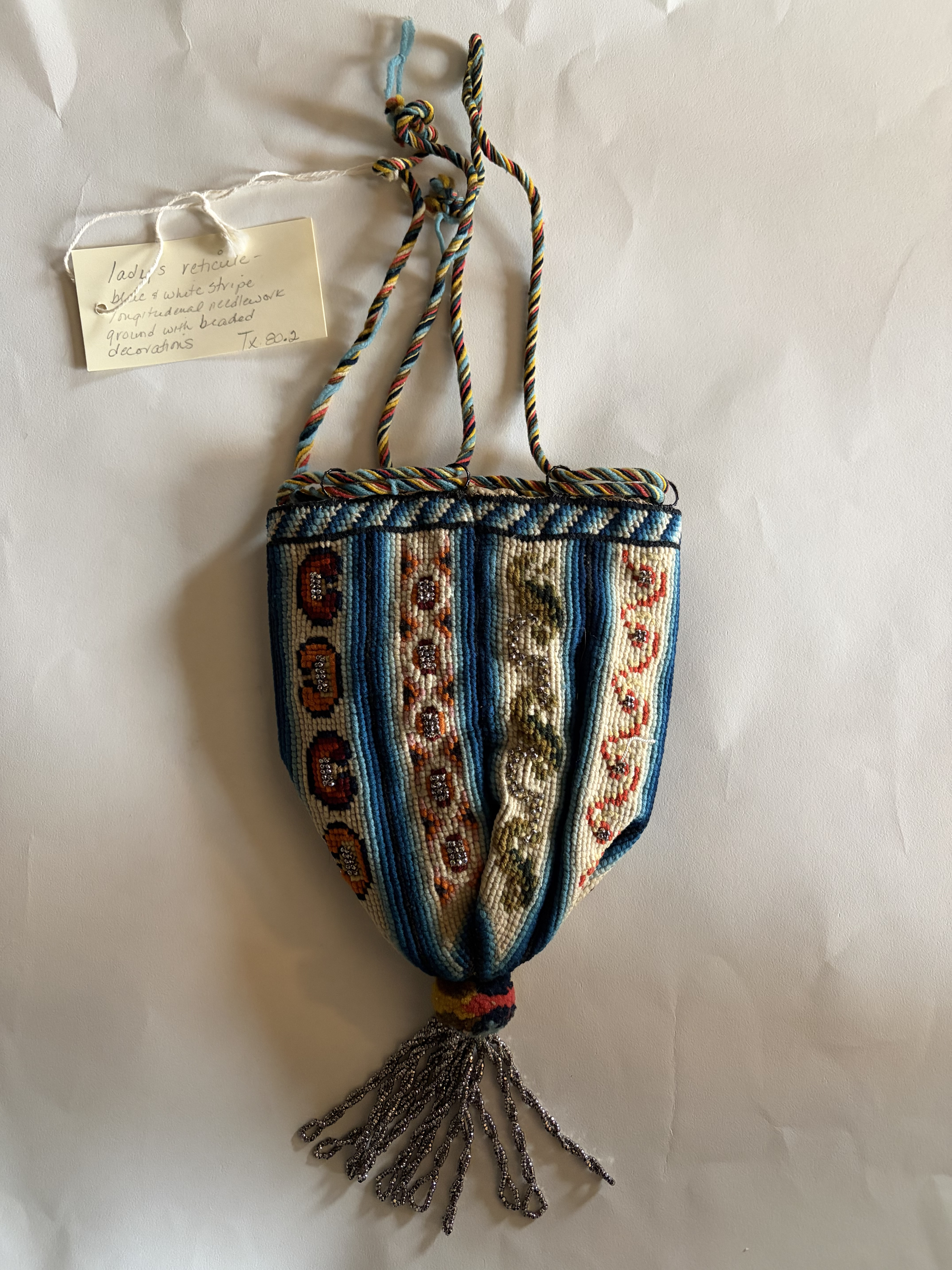
This beaded reticule dates from the middle of the 19th century (USA). The purse is made of wool canvaswork and accented with cut steel beads.
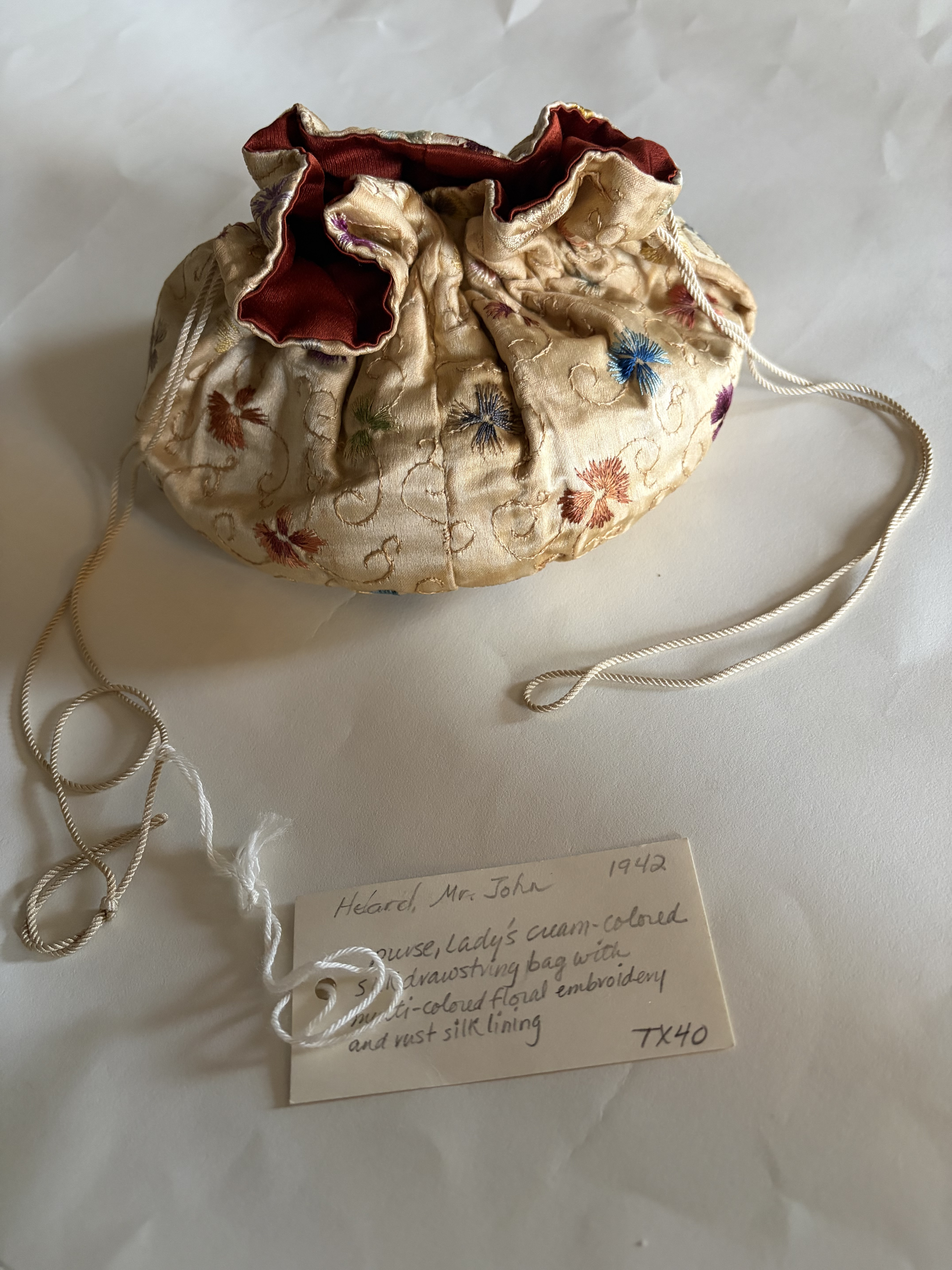
Dating from the early 19th century, this lady’s reticule is made of silk satin and embroidered with multiple colors of dianthus-like flowers.
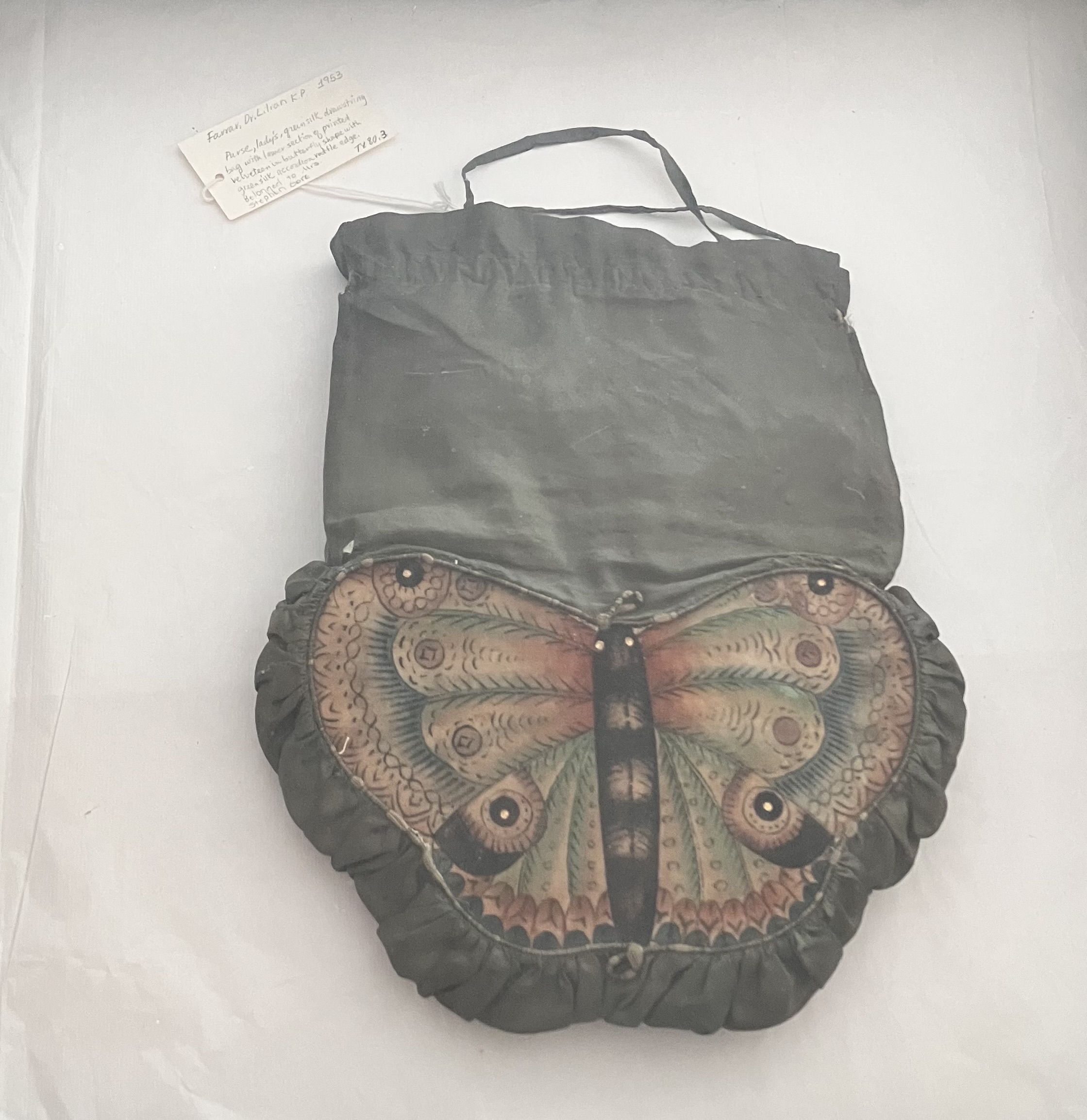
This beautiful butterfly-shaped reticule dates from the 1820s (USA). It is made of lustring silk, velvet, and cardboard. The butterfly pattern, resembling a blue morpho butterfly, was likely stamped onto the purse then painted.